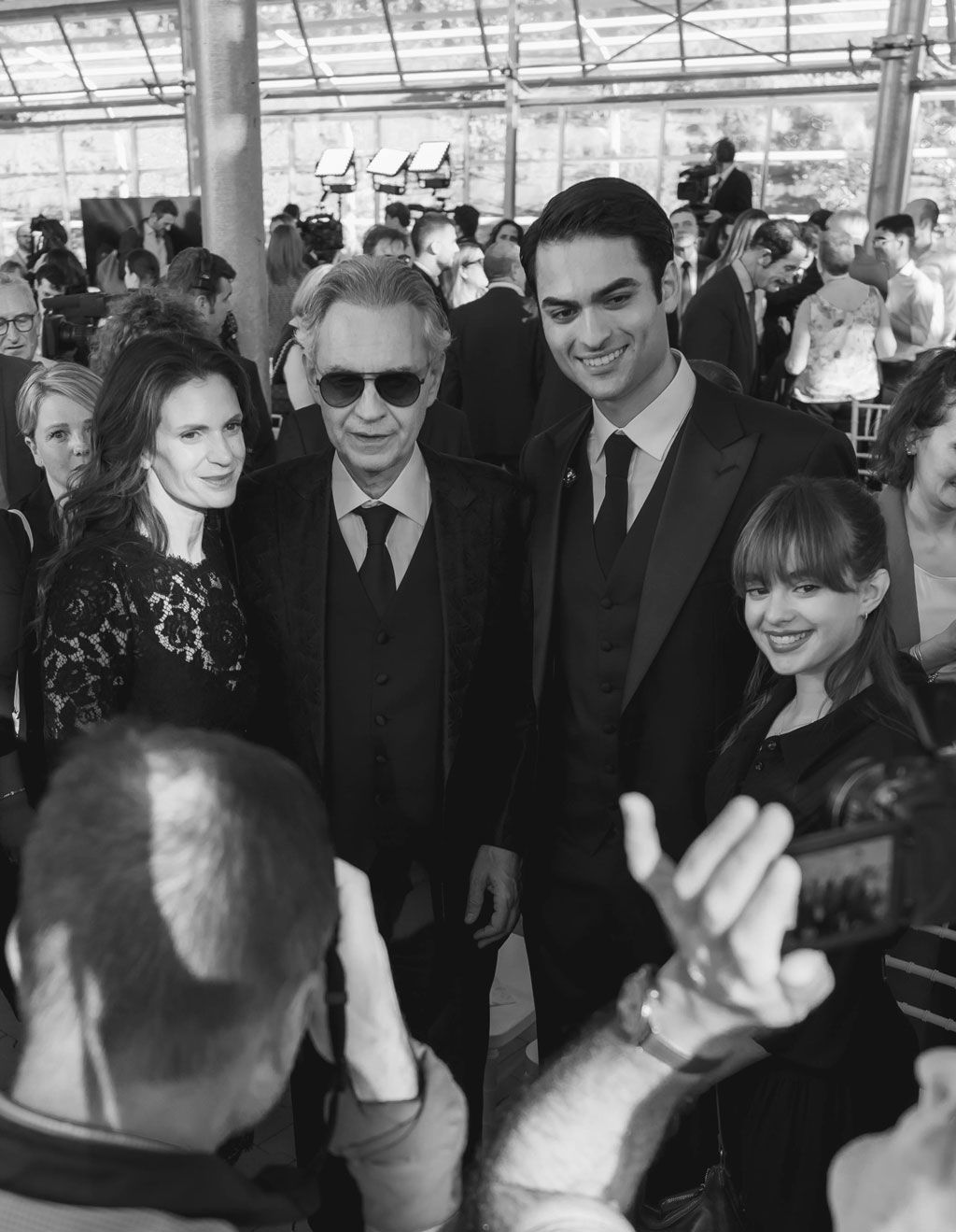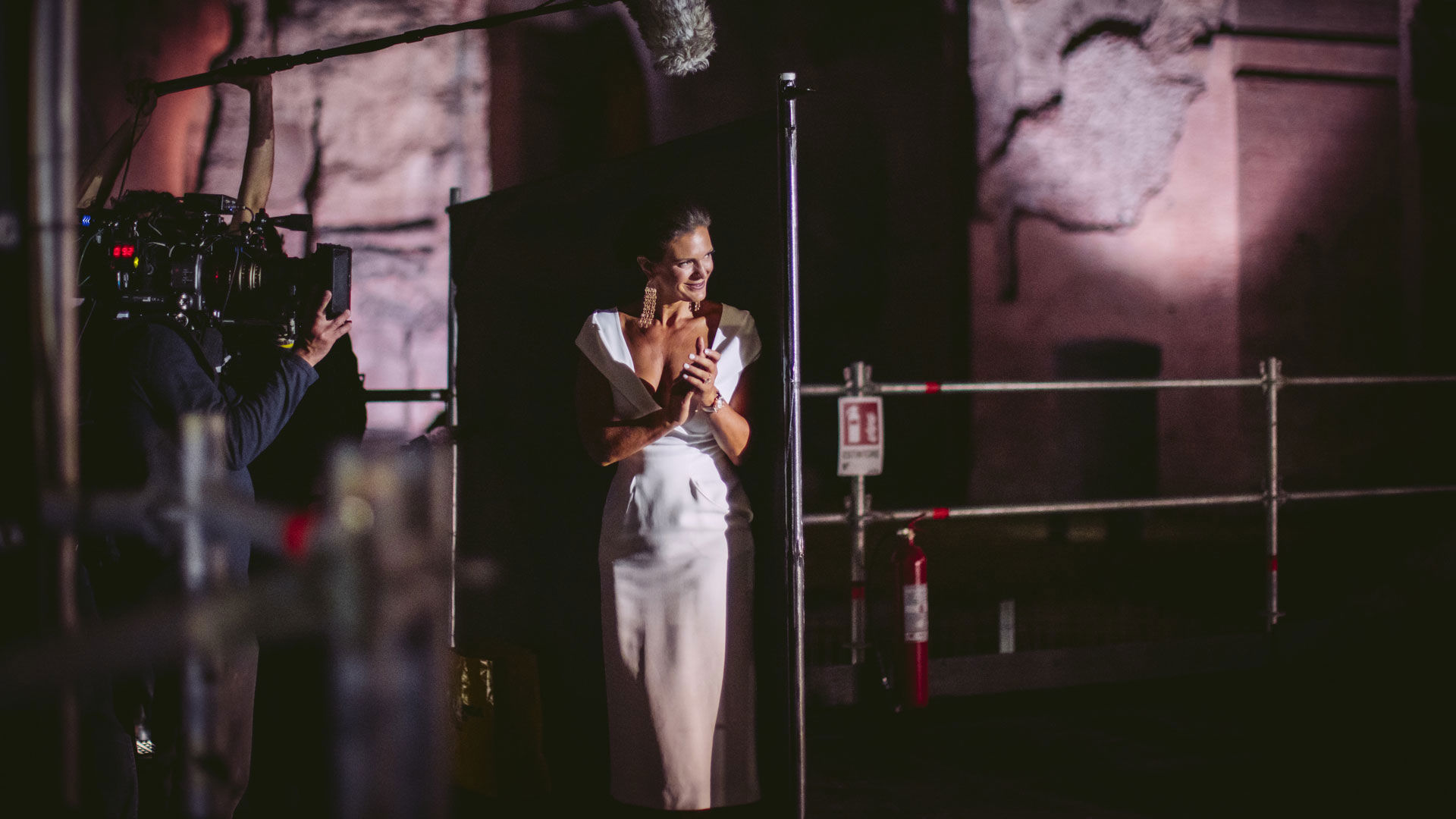
The manager of a global artist, an entrepreneur in the hospitality sector (including the best beach club in Italy), and vice-president of a humanitarian foundation with over fifty active projects around the world: Veronica Berti Bocelli's career bridges the gap between global stages and operational contexts, where everyday commitment really makes a difference. A solid and authoritative profile stands out: discipline, energy, vision and leadership capable of guiding and nurturing growth, promptly transforming ideas into reality.
What principles drive you, in your work and in life?
They are simple principles and, because of that, trustworthy: professionalism, responsibility, contact with reality. I try to be motivated by “doing well” and “doing good”. Whichever role is played, the objective remains the same: to be useful, to be present, to act with consistency and awareness. I regard the confidence placed in me as a gift: I strive to earn it through my actions, every day.
What words would you use to describe yourself?
I am a practical person. I love my job and I love sport (it helps me stay fit and keeps me balanced). When faced with a problem, I believe there is always a solution, and it must be found without excuses. I try to be both present and fair in my professional commitments and in my family life. I try to do my best, to not waste the time I have, and, in other words, to be a good person. My father used to say: in life, you choose whether to be among those who create problems or those who solve them. I choose to try on a daily basis. But of course, I have my weaknesses... I battle, for example, with impulsive empathy: if I don't control it, it can leave me exposed, overwhelmed by emotions, especially when the pain of the world — in whatever form — comes knocking at our doors.
How important is passion in the rhythm of your daily life?
It matters tremendously: it is the current that provides energy and meaning, the impetus that encourages you to grow. Alongside passion, however, I would add a word that I consider to be crucial: harmony. It is the compass that serves as a guide to maintain balance, preserve what matters, and not confuse speed with direction. On busy days — and there are plenty of those – harmony is the most graceful way of remaining clear-headed. I am dedicated to not wasting the time I have: even on the most challenging days, I strive to make something positive out of them.
Since 2006, she has headed Andrea Bocelli's management team, overseeing global events that have included personalities such as the Holy Father, the President of the United States and the British Royal Family. Meanwhile, record sales have grown by over fifty million copies. What is the secret of such success? What really makes a global project work?
I don't believe in secrets and I'm wary of formulas. At the beginning, I had a degree in Music Management and a lot of theory learned between aeroplanes and hotels; then reality set in, which is always more demanding than the textbooks. I also remember the fear well: it seemed like madness to me that a man with such an important career would entrust everything to a provincial girl. Andrea told me something very simple: “I expect you to make mistakes; they will be useful, because you will learn from them”. It was an act of trust, and also a huge responsibility. On the whole, I hope I have made few mistakes (and I have learned something from each one), thanks in part to my husband's guidance: always by my side when it comes to fundamental decisions, but only in those cases... Because Andrea's work embodies empowerment: when he recognises potential talent in a person, he knows how to trust them and to put his faith in them... Putting you in a position to express yourself. Once again, there are no secrets: there is work, responsibility and trust that must be earned each day.
You share family life, artistic and social commitments. How do you reconcile all this?
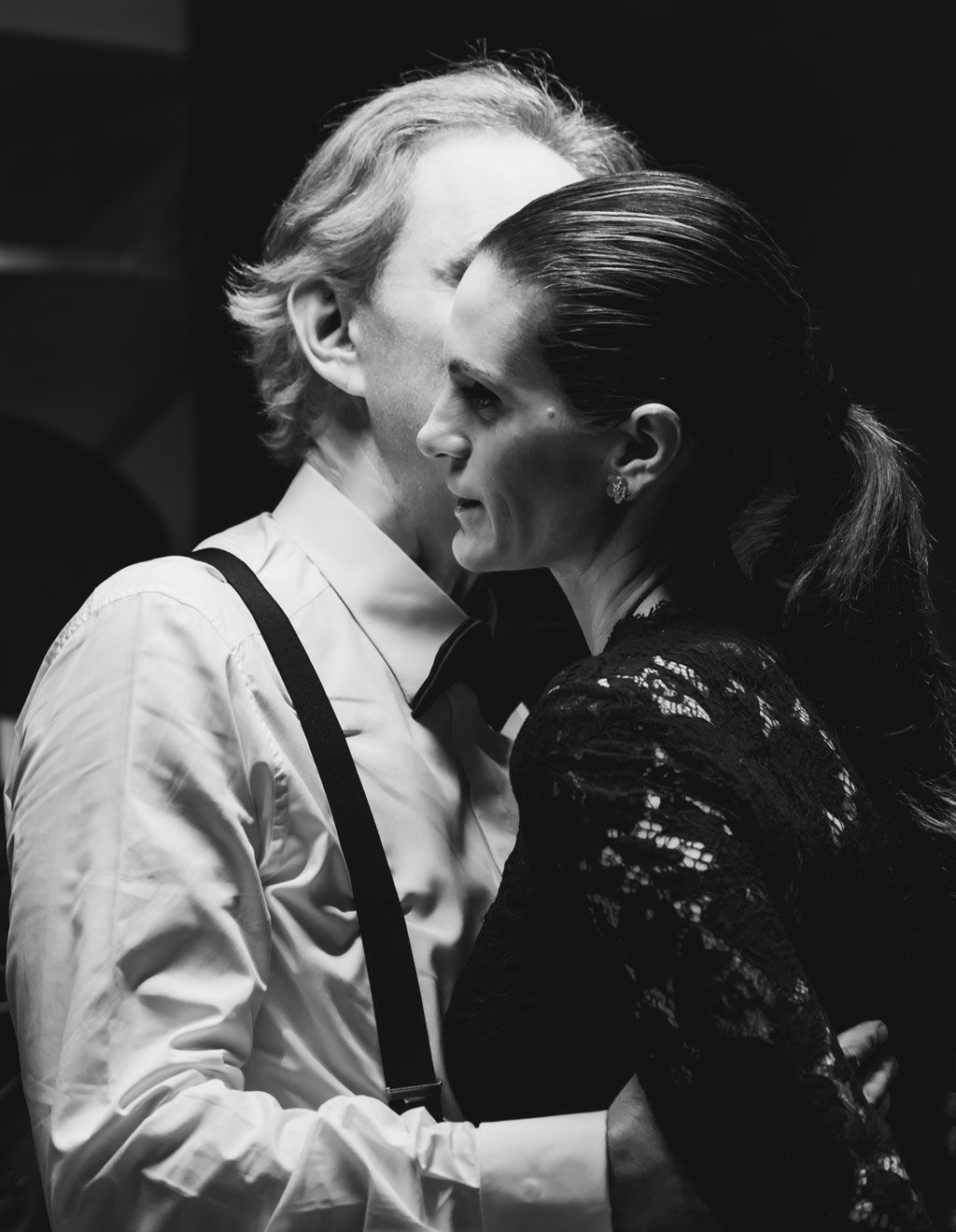
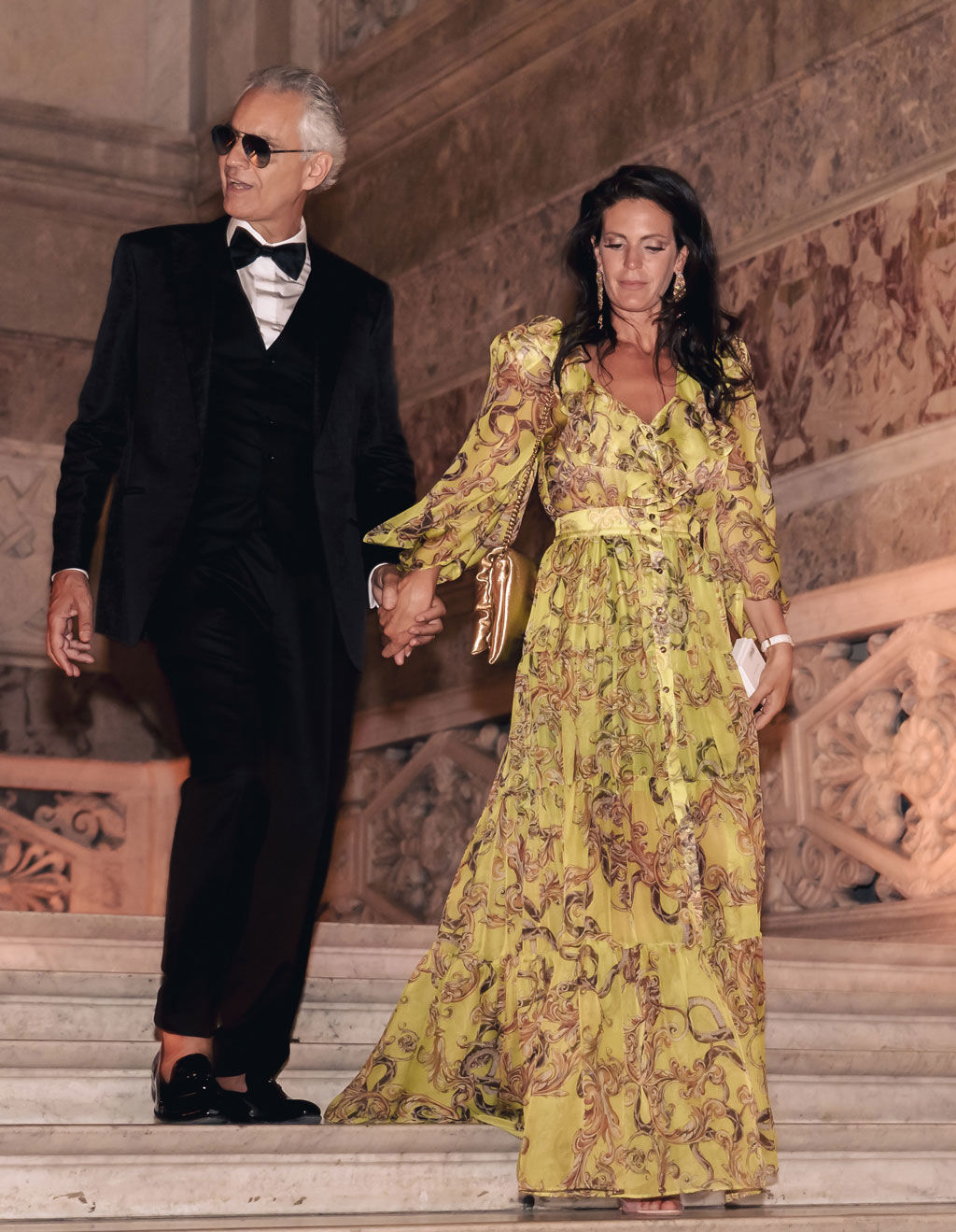
We get along because we complement each other: we are wonderfully different, and this diversity increases our need for one another, because one person's strength can be another's weakness, and vice versa. We are both passionate and competitive, but Andrea is a calm person who hardly ever becomes angry: he is often the one who helps me restore my composure and perspective. Living together also means going through the hardships together, leaning on and supporting each other. There is a line by Eugenio Montale that I carry in my heart: “I have descended, giving you my arm, at least a million staircases”. It is a familiar act for Andrea and I: we physically lean on each other. Even when it may seem that I am guiding him, it is very often he who supports me. And then there is faith, as well as sharing the same values, which bonds us and guides our family, social and artistic choices.
Manager, wife, mother, vice-president of a global foundation: how do you find balance?
To be honest, I often feel that there is simply not enough time. But, as my husband says, what matters is the level of effort you put into the things you do, the attention, the affection you are able to communicate. Reconciling them is a balancing act, and it doesn't always go smoothly: every role requires consistent dedication. Trying my best, giving it my all and striving to improve, following a few key words that I am committed to honouring: positivity, responsibility, commitment. And then trust, passion, action, collaboration. They are all pieces of the same puzzle, which I try to put in place every day.
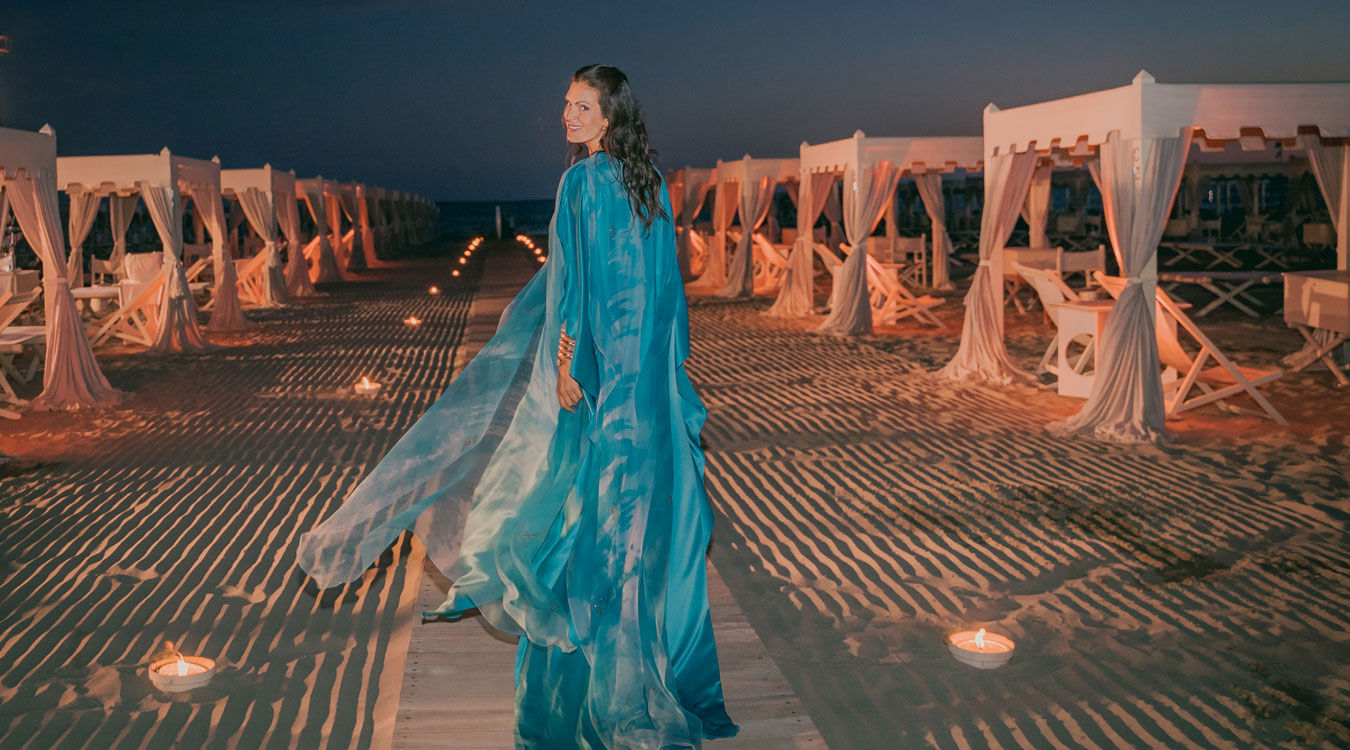
Co-owner and CEO of the Alpemare Beach Club in Forte dei Marmi, consecutively honoured as the best beach club in Italy for the past two years and awarded the Best New Hospitality 2025 Tourism Oscar. What does this venture represent?
It is a project born from love for a region and respect for its history. Versilia has a long tradition of hospitality: the sea at the front and the Apuan Alps to the rear, and a landscape that serves as a reminder that beauty is not an accessory. But tourism nowadays is international and much more demanding: it requires professionalism, language skills, appropriate standards and, most importantly, consistency between promise and experience. With Alpemare, we worked on an idea of hospitality and the “Italian” lifestyle: quality of service, attention to detail, the capacity to offer without imposing. Two gourmet restaurants, areas dedicated to wellness and relaxation, cultural activities and entertainment: guests should enjoy their holiday as a complete experience, for both the body and mind. Following the acquisition of the adjacent beach resort and its renovation, the project took on a new, broader and more mature form. However, as an entrepreneur, the thing which makes me most proud is my staff: a young team with an increasingly close-knit bond. In the end, the praise from the guests is mainly theirs.
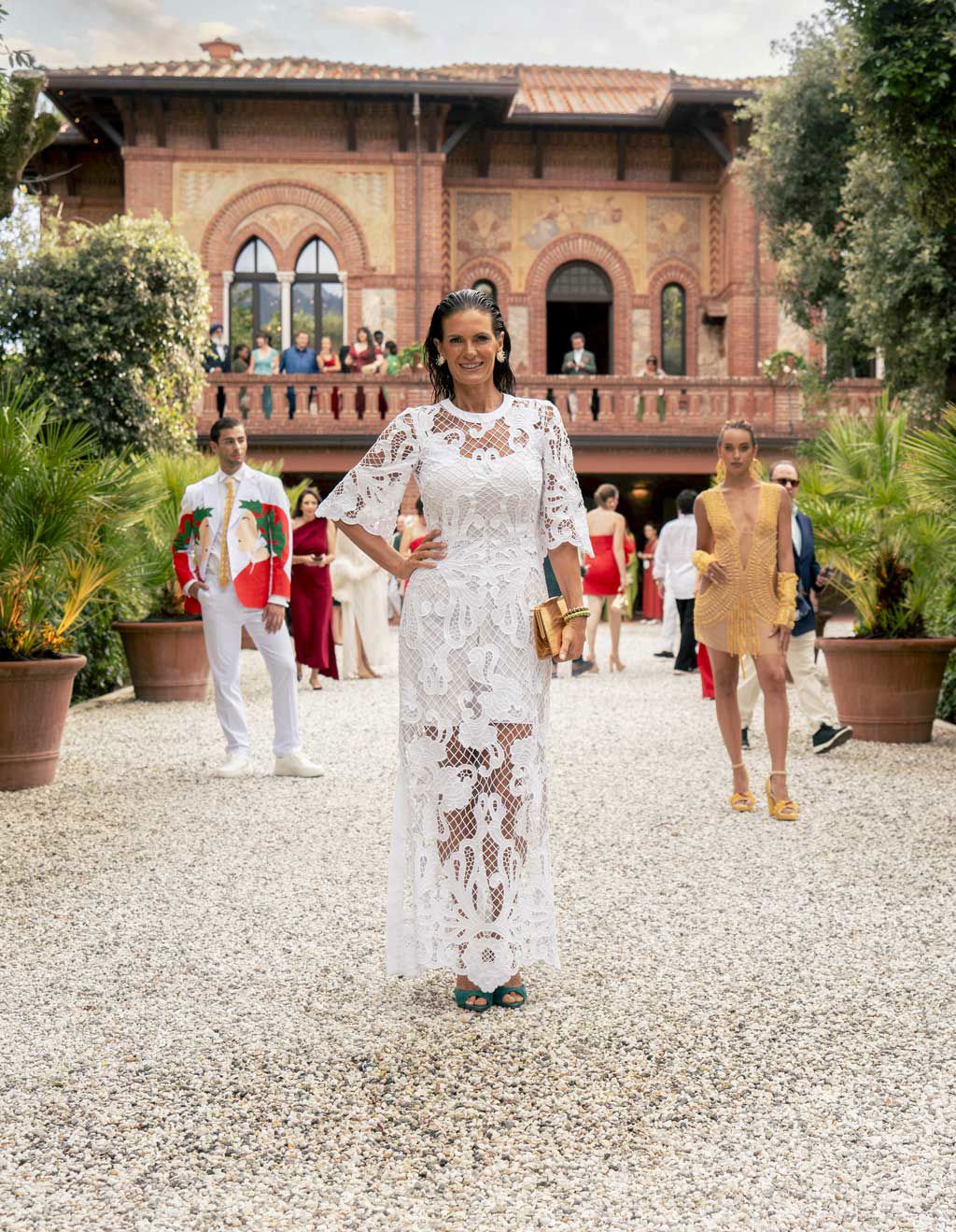
Her entrepreneurial spirit led her to found and lead VB Management, a company that organises international events, and VB Dreams, which takes care of, among other things, the management of Villa Alpebella: a place that evokes memories of the Dolce Vita, now restored and once again hosting events. What was the intention?
First and foremost, to give something back. The renovation was complex and carried out according to a principle I consider essential: safeguarding the memory of the site. We believe in Alpebella's potential and the responsibility that comes with it: to return to being a centre of attraction and gathering, particularly in cultural terms, hosting prestigious, high-quality events. And I think it's natural to link it to Alpemare: they are less than three kilometres apart, and together they can create a virtuous circle for the entire Apuan-Versilian area, with cultural as well as economic benefits. If well managed, its beauty multiplies its potential. Today, Alpebella (opened in Summer 2023 with the lavish charity evening “The Greatest Show”) has become a sought-after destination for exclusive events by renowned brands, music festivals and private events, thereby redeveloping an area that in the 1960s and 1970s was a favourite destination for top-level international tourism (among the past patrons were Charlie Chaplin, Frank Sinatra and the Queen of Belgium).
Which factors have made a high-end Italian coastal area more attractive to international investors and operators in recent years?
Its appeal has grown for two main reasons: the gradual adaptation of its range of services to the standards demanded by international customers (not only in terms of catering and bathing facilities, but also in terms of hospitality) and the growing presence of capital in a globalised economic context. This process has hastened the transformation of the local economy: accommodation facilities have evolved towards higher categories with specialised services and qualified staff, and there has been a greater influx of brands and groups capable of sustaining investments and longer payback periods than family-run businesses.
With the arrival of groups and brands, how can the risk of distortion be limited and more stable development created throughout the year?
In my opinion, the risk can be managed by channelling investments towards measurable added value for the area: extending the season with structured programmes and services (including cultural and conference events), improving overall quality and boosting employment. I think we have to accept that a part of the trade and property transformation is already underway; the real challenge is managing it with choices that increase its appeal beyond the peak months and make the establishment of new operators compatible with a long-term vision, not just immediate returns.
From where did the idea for the Andrea Bocelli Foundation originate fifteen years ago, and what was your personal motivation for establishing it?
ABF was created from a foundation of voluntary work and philanthropy that Andrea and I had been cultivating steadily. At a certain point, we realised that goodwill on its own is not enough: you need method, continuity and a structure that can withstand the test of time. The project also happened to coincide with the period when I was expecting Virginia: it may be that this situation made us even more aware. From the outset, the foundation was structured as an “extended family”, specifically because it was inspired by the fundamental values of the family, understood as the building block of society and a training ground for respect and harmony. Our mission statement reads “Empowering people and communities”, expressing our desire to work towards ensuring that everyone has opportunities for growth and talent development. With time, this approach has enabled us to move from occasional interventions to scores of robust, measurable, and replicable programmes.
What is the deeper meaning behind ABF's work, and what do the programmes have in common?
The driving force behind us is the desire to be helpful in a practical and responsible way. This is why we invest in education, seen as the growth of the whole person: this is how we contribute to truly transforming communities. Each of the programmes are united by the desire to create quality educational ecosystems that generate awareness, skills and dignity, particularly in the most vulnerable contexts. For us, social innovation is all about replicable actions that are designed to have a lasting impact. We work with an integrated approach, in which space, relationships, community and care go hand in hand. We work together with public institutions, local organisations and private partners, sharing our skills and visions.
Why does ABF choose to work with children and young people, and how do you measure the impact of what you do?
Because children and young people are the place where the future takes shape. By investing in them, we can rebuild the present and open up fairer and more shared opportunities: when a young person finds space to grow and express themselves, the effect spreads to their family, school and community. Our goal is empowerment: contexts in which to strengthen skills, develop creativity and build meaningful relationships. For us, education is not just about “school”: it's about dignity, trust and real opportunities. The impact is most evident in real-life situations... A class that begins again, a family that regains stability, a community that once again has tools and points of reference. Then there are the figures, which are used for measurement and reporting purposes: to date, ABF has raised and allocated over €80 million, reaching 800,000 direct beneficiaries and 3.6 million indirect beneficiaries. Nowadays, the foundation has 14 offices worldwide and 53 active projects in Italy, the United States and various countries in vulnerable areas. Across the educational programmes, over 20,000 students have access to high-quality, accessible and inclusive courses. Where needs are most urgent, we also intervene in essential services: in Haiti, in the Cité Soleil slum in Port-au-Prince, we provide 90,000 litres of clean water per day to around 400,000 people and guarantee basic healthcare to over 500,000 people.
What does a choral project like “ABF Voices Of” actually bring to vulnerable areas, apart from music?
Music is a language that provides education: it teaches listening, discipline, empathy, and relationships. Singing in a choir is the most immediate form of “doing things together”: you learn to breathe with others, to support and be supported. It reinforces personal identity and builds communities. In fragile contexts, this experience provides a source of practical hope: it develops skills, stimulates creativity and promotes cooperation. In 2026, this journey will become even more intense with the ABF Voices Of Global Gathering in Italy, during the 21st edition of the Teatro del Silenzio in Lajatico (Andrea's hometown): young singers from Uganda, the Holy Land, Naples and Camerino will spend a week together, sharing their culture and experiences. It is a direct way of educating global citizens through mutual responsibility and listening.
She has been involved in international philanthropic initiatives and major fundraising events. What stands out most to you about this “networking” work?
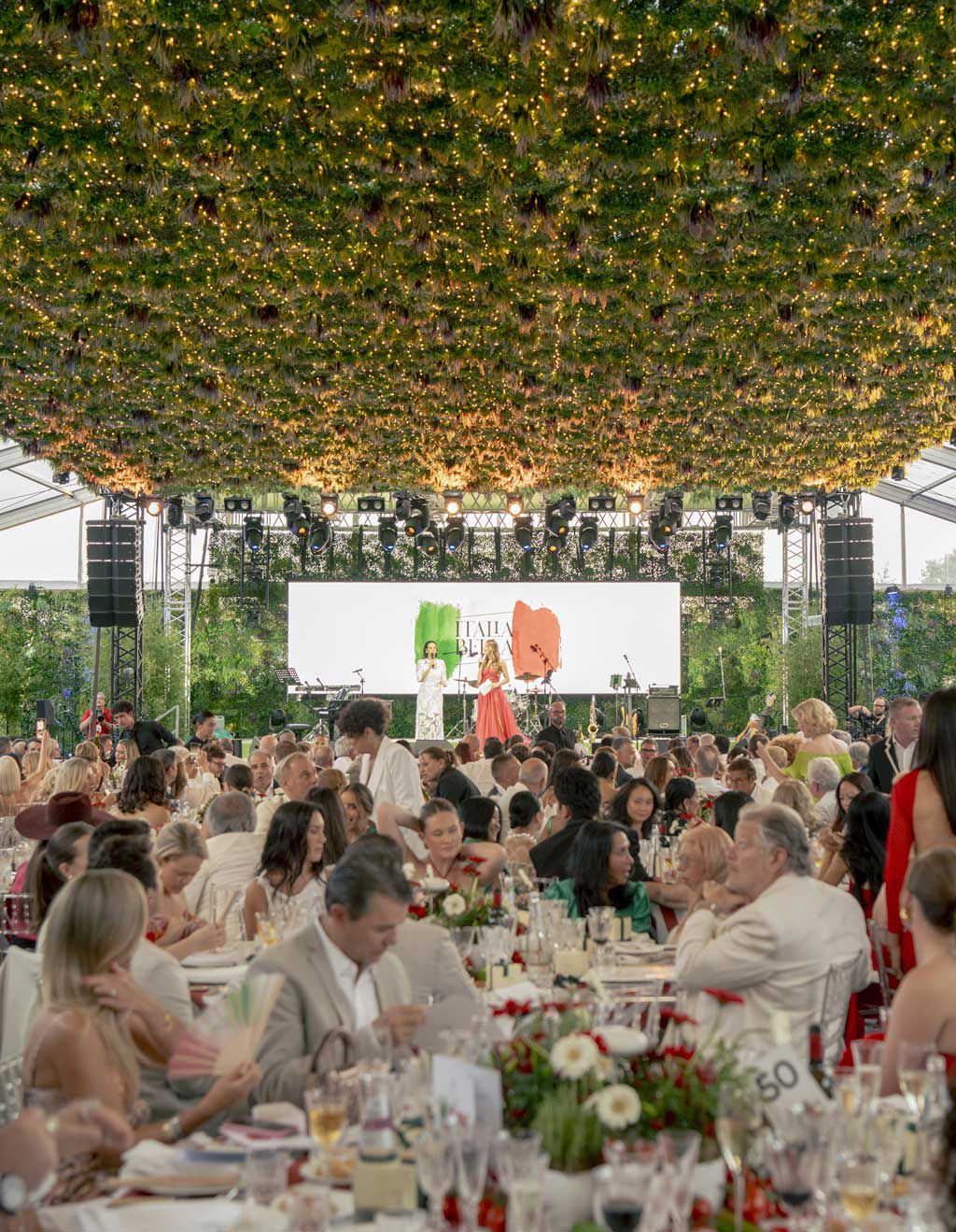
I am impressed by the notion that solidarity, when it truly functions, is a task that involves people, time, organisation, and care. Sharing management experience means building the conditions for a meeting to become more than just a pleasant moment, but rather a source of real resources, continuity and projects that stand the test of time. In this sense, experiences such as the “Celebrity Adventures”, which started in 2014, have taught me a lot. These are occasions when friends, supporters and major donors arrive from all over the world, and Italy becomes a place of hospitality and togetherness: Portovenere, the Arena di Verona, the historic buildings of Florence, Venice and Rome. Then, in 2017, the highlight at the Quirinale — hosted by the President of the Republic — brought home how much a project can become a joint effort when trust is built around it. In all of this, Italy is not just the setting: it is a daily commitment. How you tell it matters, as does how carefully you bring it to life, without forcing it, letting its beauty speak for itself (landscape, music, cuisine, art), because if beauty is respected, it becomes a practical and important lever for good.
After receiving the Leonardo da Vinci Award for Humanitarianism in Washington in the presence of the President of the United States, and in view of your roles — for example, on the Board of Directors of Toscana Aeroporti (2024–2026) and on the Advisory Board of Fondazione Pubblicità Progresso — what do these positions and awards mean to you?
For me, they only have meaning if they relate to real work, everyday work. A position is not a label: it is responsibility, participation, learning, and the ability to contribute proactively. In areas such as airports, for example, the issue is very specific: connections and infrastructure are a decisive lever for the region and for promoting tourism; therefore, reliability and vision are required. Regarding the awards, I see them as an invitation to continue in the same measure: not as a goal to be showcased, but as a call for consistency.
If you were to leave only one reflection, what would it be?
There is one that has always been with me, and ABF proves it to me every day. Feelings can be learned. They are learned by practising kindness, listening and having compassion. They are learned by walking together, running with those at the front, without forgetting those at the back. For true strength is that which is shared. Which is why, for me, doing good is not a duty: it is a privilege. It is the opportunity to harness, with gratitude, the energy that God gives us, transforming it into concrete consideration for others. Even when it is costly, even when it is exhausting, especially when it requires perseverance. After all, a smile is not just for decoration. It is a sign that you are doing it with the right spirit, without complaining and without feeling that you are “owing” the world something. It is a way of always being human, and remembering that what really matters is built together, one step at a time.