“A new expression of contemporary sophistication is emerging – one that embraces a modern, understated kind of luxury focused on attention to detail, respecting ingredients, and rediscovering the pleasure of rituals. Rather than chasing the restaurant experience, it brings haute cuisine into your own kitchen.”
This form of luxury, as identified by Fratelli Desideri, values personal experience, measurable quality and mindful appreciation.
It’s a concept that promises not only a gastronomic experience, but also a cultural one. That’s because the idea isn’t simply to “cook like a chef”, but to reconnect with intimate, everyday rituals: setting the table, cooking and sharing. And like all true luxury, it lingers – on the palate, in the memory, and in the shared moments of a perfect evening.
Fratelli Desideri was founded with a clear idea and the right technology to turn it into an experience – making iconic recipes accessible without stripping them of their identity, substance or emotion.
The project was launched in Cuneo in 2018 by Tommaso Desideri, who named the company after his sons Sebastiano, Leone and Achille. He explains: “The idea came to me during a trip to the United States, where people are used to buying pre-packaged food and ordering boxes of ingredients with a recipe to follow. It felt like a logical step. Looking at market research carried out with a view to bringing the model to Italy, it immediately became clear that Italians already had access to good-quality products in small local shops. To make the idea work, we realised we needed to draw inspiration from the excellence and artistry of Italian Michelin-starred restaurants to create gourmet dining experiences that everyone could enjoy.”
With this in mind, the head office in Via Carlo Pascal in Cuneo began to reach out to a number of Michelin-starred chefs. The project was well received, and Covid restrictions accelerated its development; in 2020, Fratelli Desideri signed a contract with MasterChef Italia – a mainstream seal of approval that gave the format instant recognition – to become the world’s first licensees of their Mystery Boxes. This was the breakthrough that paved the way for the Fratelli Desideri brand to collaborate with
Michelin-starred restaurants. Today, 18 of them partner in the project, holding a total of 46 Michelin stars.
Meanwhile, freeze drying – a technology that keeps ingredients fresh at room temperature for up to 18 months without preservatives (“the same process NASA uses for astronauts’ food,” adds Tommaso Desideri) – has made the meal kits truly unique. The food is first frozen, then placed in a vacuum chamber, where more than 99% of the water is removed by sublimation. The result is shelf-stable, light ingredients, ready to be brought back to life in the pan with their taste and quality intact, without preservatives or additives. The science behind this is clearly not a gimmick, but a means to safeguard quality and make it replicable.
The initial idea of adapting the meal kit format to a culture where top-quality ingredients are already the norm thus turned out to be a pivotal strategy. It was a radical choice to not merely “simplify cooking”, but to translate haute cuisine into a reliable domestic method.
“Behind every box,” insists Tommaso, “there’s an unseen, methodical process of selecting, calibrating and constructing a sequence of steps to ensure the final result stays true to the original.”
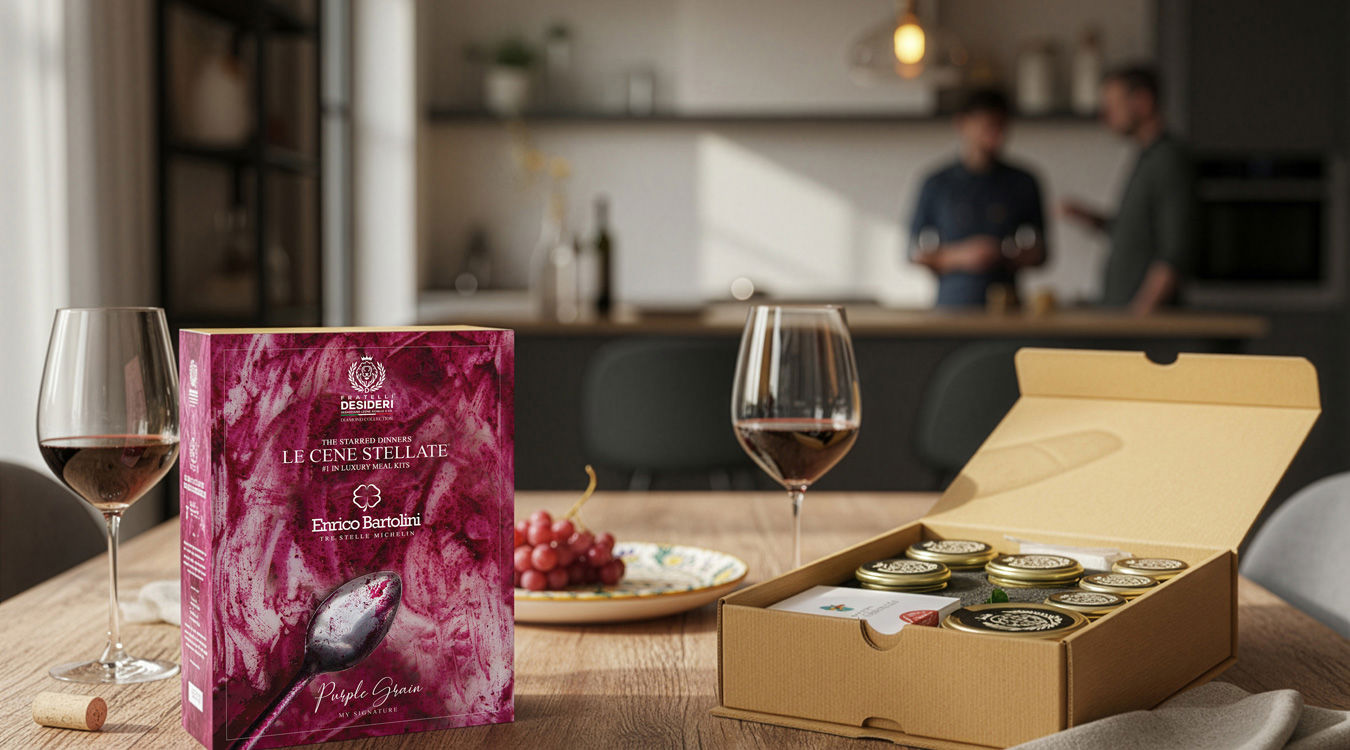
Today, the Fratelli Desideri platform is a carefully curated signature collection—an intangible asset defined by method, discipline and taste.
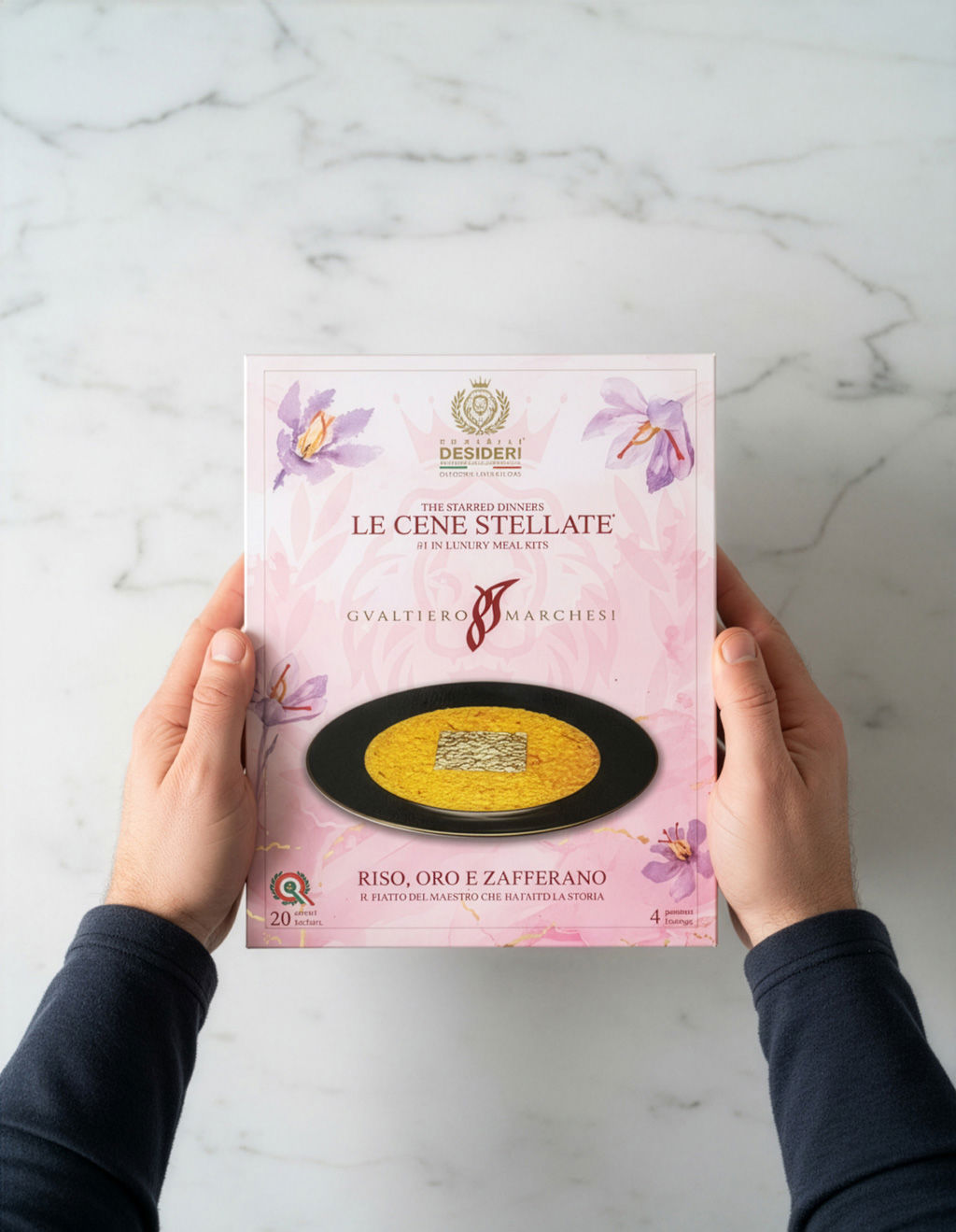
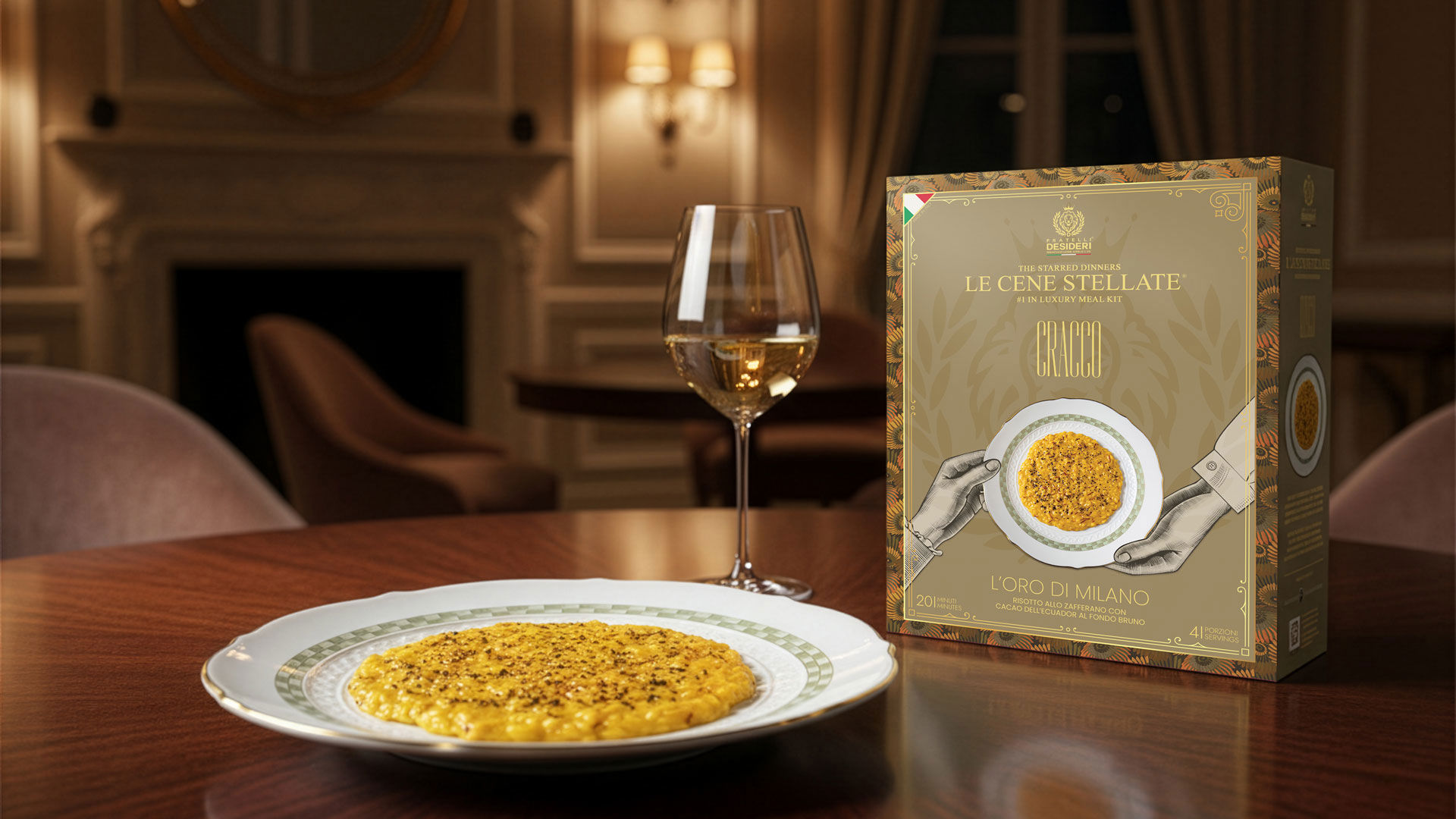
Together with MasterChef Italia’s Mystery Boxes, some of the most iconic dishes that have been offered to date include Carlo Cracco’s risotto alla milanese and Gualtiero Marchesi’s signature “saffron and gold risotto”—a manifesto of aesthetics and balance that is simple yet theatrical, with its sheet of gold leaf that delicately yields at the first touch of the spoon. “It is the dish that best expresses my concept of beauty. Essential, with no frills,” Marchesi once said. In the Carnaroli kit, saffron threads, butter, cheese, broth and gold leaf create a ritual that transcends the recipe.
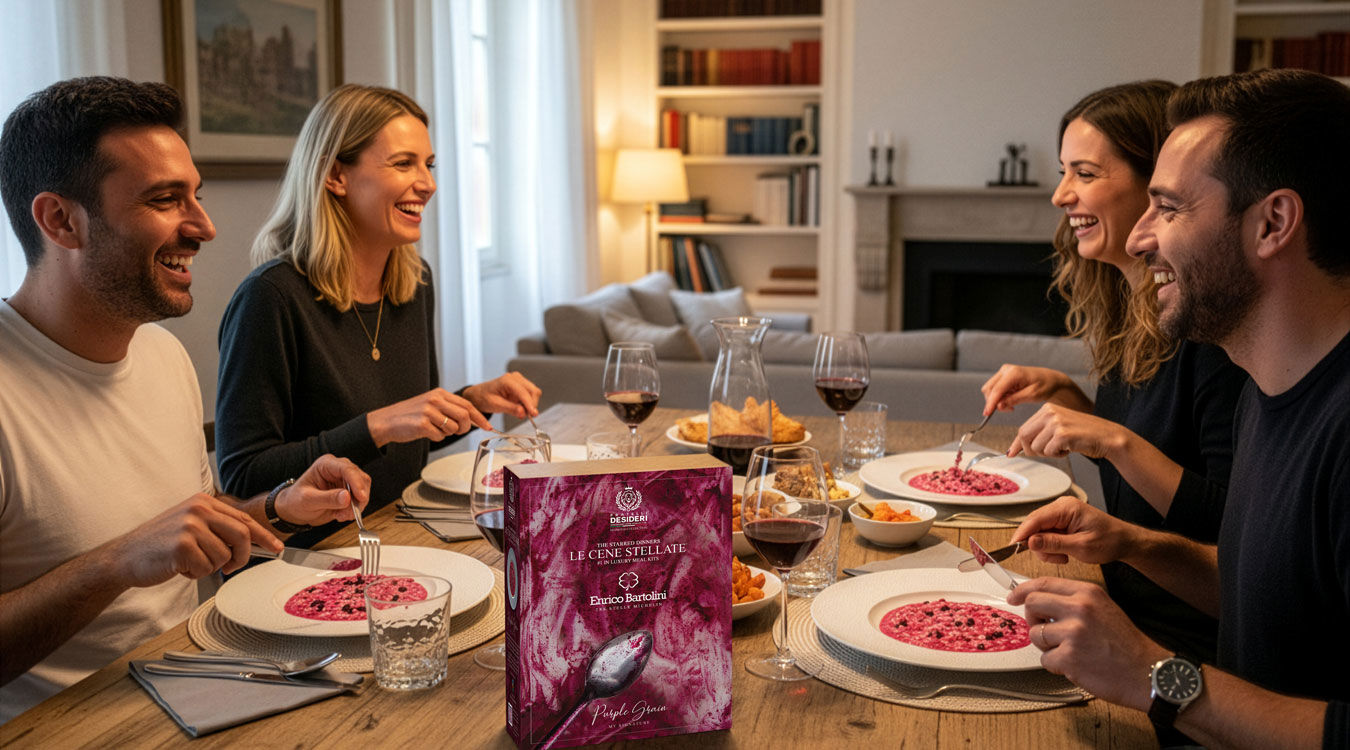
Then there are iconic and unforgettable dishes like Antonino Cannavacciuolo’s spaghetti “O mare mio”, Marco Sacco’s carbonara “Au Koque”, and Enrico Bartolini’s risotto, whose presentation is reminiscent of drip painting, where the sweet notes of red berries and beetroot meet the intensity of blue cheese, rounded off with a walnut cream—a dish that is a feast for the eyes even before the first bite; at home it becomes more of an exercise in style than a simple dinner.
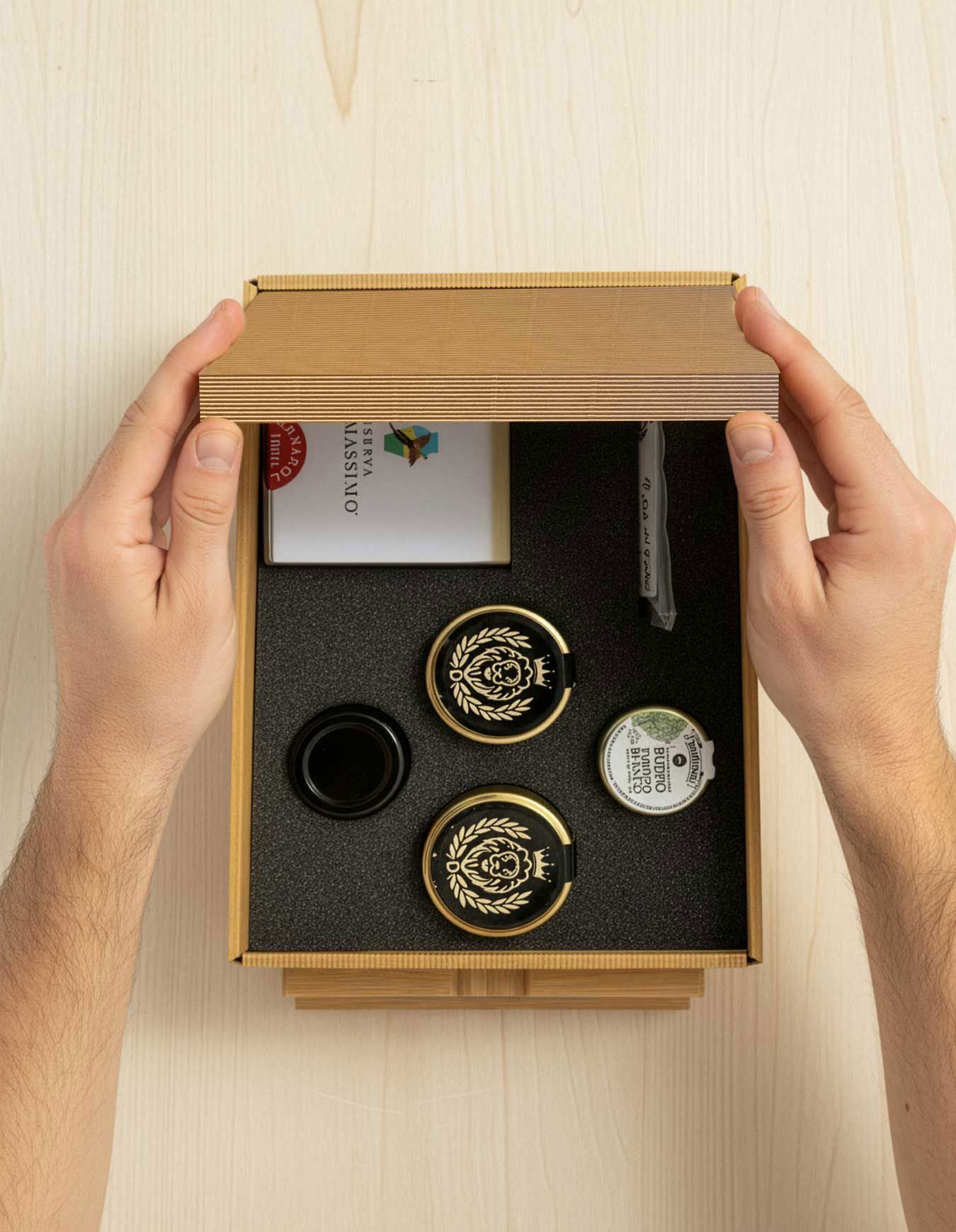
The unboxing experience is designed to be a ritual. Opening one of the boxes is like entering a perfectly organised microcosm, where every ingredient is named, measured and designed to reduce any obstacles between wanting to create a dish and achieving it: “The instructions guide you without being intrusive; the kitchen remains yours, but with the reassurance of a method you can rely on.” This is where the pleasure of craftsmanship meets the precision of technology: a pre-arranged mise en place that is ready to become an experience, an aroma and a story.
A Fratelli Desideri box is also the perfect gift if you want to give someone a Michelin-starred dining experience as a stylish,
extra-special present. This flexibility is also a real plus when it comes to corporate gifting: the gift doesn’t have to be used on a specific day, but fits around the recipient’s schedule. It’s customisable and, above all, shareable—a dinner to be experienced, rather than a gadget to be forgotten. Unsurprisingly, in the corporate world, gastronomic experiences are becoming a tool for building relationships: customers and employees are rewarded with something that sparks conversation and creates lasting memories. This is the approach behind numerous incentive and gift programmes, adopted when the aim is to make someone feel truly valued.
And here sustainability, incorporated in the format, is also practical. The ingredients are already measured out, so there’s no leftover food sitting in the cupboard, and no “extra” expenses just to follow a complicated recipe. It’s a form of sustainability that reduces food waste by eliminating excess and optimises shelf life as a way of managing stock and consumption patterns more efficiently.
Because – let’s not forget – luxury also entails responsibility.
And since Italian cuisine and its rituals have now been recognised as part of UNESCO’s intangible cultural heritage, added value comes naturally. Technology becomes a tool for protection and transmission.